
Traverse City


(231) 922-9100

Like Us On Facebook

Blog

When Should I Seek Medical Attention for an Ankle Sprain?

Ankle sprains are a common injury among athletes. The severity of an ankle sprain can vary from a mild overstretching of the ligaments in the ankle to a severe ligament tear. While there are options for treating mild ankle sprains at home, such as resting, icing, compressing, and elevating the affected ankle, further medical attention will be warranted in more severe cases. You should seek immediate medical attention if your foot or lower leg is bent at an angle. You should also see a doctor if you heard a popping sound at the time of injury, have moderate to severe pain, have severe swelling or bruising, are unable to walk or bear weight on the affected ankle, experience numbness or tingling after the injury, or if you have swelling or bruising that lasts longer than two weeks. If you have any of these symptoms, it is suggested that you seek the care of a podiatrist as soon as possible.

Ankle sprains are common but need immediate attention. If you need your feet checked, contact Dr. Ronald K. Olm from Grand Traverse Foot & Ankle Center. Our doctor can provide the care you need to keep you pain-free and on your feet.

How Does an Ankle Sprain Occur?

Ankle sprains take place when the ligaments in your ankle are torn or stretched beyond their limits. There are multiple ways that the ankle can become injured, including twisting or rolling over onto your ankle, putting undue stress on it, or causing trauma to the ankle itself.

What Are the Symptoms?

  • Mild to moderate bruising
  • Limited mobility
  • Swelling
  • Discoloration of the skin (depending on severity)

Preventing a Sprain

  • Wearing appropriate shoes for the occasion
  • Stretching before exercises and sports
  • Knowing your limits

Treatment of a Sprain

Treatment of a sprain depends on the severity.  Many times, people are told to rest and remain off their feet completely, while others are given an air cast. If the sprain is very severe, surgery may be required.

If you have suffered an ankle sprain previously, you may want to consider additional support such as a brace and regular exercises to strengthen the ankle.

If you have any questions please feel free to contact one of our offices located in Traverse City and Kalkaska, MI . We offer the newest diagnostic tools and technology to treat your foot and ankle needs.
Read more about Ankle Sprains

Treatment Options for Sesamoiditis

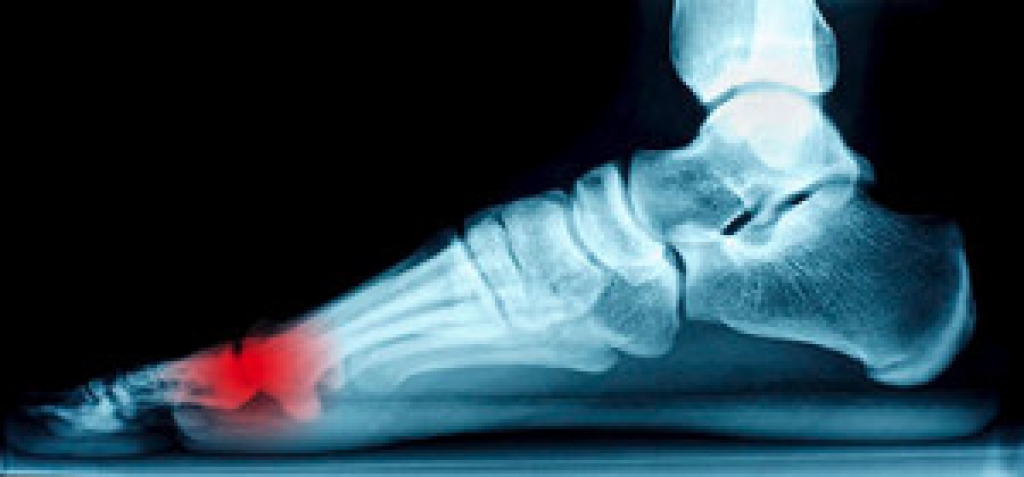
The sesamoid bones are located beneath the metatarsal bone under the big toe. Pain in the sesamoid bones is known as sesamoiditis. While it can be caused by metatarsalgia, other signs of sesamoiditis includes inflammation, causing warmth and swelling or an occasional redness. Symptoms may worsen when wearing thin soled or high heeled shoes. One of the most common methods to treat sesamoiditis is wearing a shoe with a thick sole. However, if pain persists, visiting a podiatrist is suggested. A podiatrist will be able to prescribe orthotics and pain medications if necessary. A podiatrist will also check for fractures to the bones, and determine if surgery is necessary.

Sesamoiditis is an unpleasant foot condition characterized by pain in the balls of the feet. If you think you’re struggling with sesamoiditis, contact Dr. Ronald K. Olm of Grand Traverse Foot & Ankle Center. Our doctor will treat your condition thoroughly and effectively.

Sesamoiditis

Sesamoiditis is a condition of the foot that affects the ball of the foot. It is more common in younger people than it is in older people. It can also occur with people who have begun a new exercise program, since their bodies are adjusting to the new physical regimen. Pain may also be caused by the inflammation of tendons surrounding the bones. It is important to seek treatment in its early stages because if you ignore the pain, this condition can lead to more serious problems such as severe irritation and bone fractures.

Causes of Sesamoiditis

  • Sudden increase in activity
  • Increase in physically strenuous movement without a proper warm up or build up
  • Foot structure: those who have smaller, bonier feet or those with a high arch may be more susceptible

Treatment for sesamoiditis is non-invasive and simple. Doctors may recommend a strict rest period where the patient forgoes most physical activity. This will help give the patient time to heal their feet through limited activity. For serious cases, it is best to speak with your doctor to determine a treatment option that will help your specific needs.

If you have any questions, please feel free to contact one of our offices located in Traverse City and Kalkaska, MI . We offer the newest diagnostic and treatment technologies for all your foot care needs.

Read more about Sesamoiditis

Signs of Plantar Fasciitis

Plantar fasciitis is the result of the plantar fascia, the fibrous band of tissue on the bottom of the foot that connects the toes to the heel, becoming inflamed. A sharp pain inside the heel and at the back of the arch is a key signal of plantar fasciitis. Most of the pain that is experienced from plantar fasciitis gradually worsens over time, and it is usually the worst after prolonged periods of rest. For example, after waking up in the morning the pain is at its worst because the plantar fascia shortens when the foot is at rest. Those who have plantar fasciitis may also experience tenderness in the heel, a tingling or burning sensation in the foot, pain while flexing the foot, and limping. If you are experiencing any of the symptoms that indicate plantar fasciitis, consulting with a podiatrist for a proper diagnosis and treatment plan is highly recommended.

Plantar fasciitis can be very painful and inconvenient. If you are experiencing heel pain or symptoms of plantar fasciitis, contact Dr. Ronald K. Olm  from Grand Traverse Foot & Ankle Center. Our doctor can provide the care you need to keep you pain-free and on your feet.

What Is Plantar Fasciitis?

Plantar fasciitis is the inflammation of the thick band of tissue that runs along the bottom of your foot, known as the plantar fascia, and causes mild to severe heel pain.

What Causes Plantar Fasciitis?

  • Excessive running
  • Non-supportive shoes
  • Overpronation
  • Repeated stretching and tearing of the plantar fascia

How Can It Be Treated?

  • Conservative measures – anti-inflammatories, ice packs, stretching exercises, physical therapy, orthotic devices
  • Shockwave therapy – sound waves are sent to the affected area to facilitate healing and are usually used for chronic cases of plantar fasciitis
  • Surgery – usually only used as a last resort when all else fails. The plantar fascia can be surgically detached from the heel

While very treatable, plantar fasciitis is definitely not something that should be ignored. Especially in severe cases, speaking to your doctor right away is highly recommended to avoid complications and severe heel pain. Your podiatrist can work with you to provide the appropriate treatment options tailored to your condition.

If you have any questions, please feel free to contact one of our offices located in Traverse City and Kalkaska, MI . We offer the newest diagnostic and treatment technologies for all your foot care needs.

Read more about Plantar Fasciitis

Do Your Child's Feet Hurt?

Have your child's feet been examined lately? Healthy feet are happy feet. If your child is complaining of foot pain, it may be a sign of underlying problems.

Causes of Fungal Nail Infections

Fungal nail infections, also known as onychomycosis, can cause the nails to become thick, yellow, and crumbly. Fungal nail infections are usually not painful unless they become severe. Small cracks in the nail or the skin surrounding the nail allow for fungi to come into the nail and infect it. Those who have an injury to the nail, are diabetic, or have a weakened immune system, are said to be at a higher risk of developing a fungal nail infection. Fungi often thrive in warm, moist environments, such as locker rooms and public pools, and the fungi tend to spread to others while in these areas. Because antifungal medication or removal of the nail may be necessary to get rid of the infection fully, those who are experiencing a fungal nail infection should consult a podiatrist.

If left untreated, toenail fungus may spread to other toenails, skin, or even fingernails. If you suspect you have toenail fungus it is important to seek treatment right away. For more information about treatment, contact Dr. Ronald K. Olm of Grand Traverse Foot & Ankle Center. Our doctor can provide the care you need to keep you pain-free and on your feet.

Symptoms

  • Warped or oddly shaped nails
  • Yellowish nails
  • Loose/separated nail
  • Buildup of bits and pieces of nail fragments under the nail
  • Brittle, broken, thickened nail

Treatment

If self-care strategies and over-the-counter medications does not help your fungus, your podiatrist may give you a prescription drug instead. Even if you find relief from your toenail fungus symptoms, you may experience a repeat infection in the future.

Prevention

In order to prevent getting toenail fungus in the future, you should always make sure to wash your feet with soap and water. After washing, it is important to dry your feet thoroughly especially in between the toes. When trimming your toenails, be sure to trim straight across instead of in a rounded shape. It is crucial not to cover up discolored nails with nail polish because that will prevent your nail from being able to “breathe”.

In some cases, surgical procedure may be needed to remove the toenail fungus. Consult with your podiatrist about the best treatment options for your case of toenail fungus.  

If you have any questions please contact one of our offices located in Traverse City and Kalkaska, MI . We offer the newest diagnostic and treatment technologies for all your foot and ankle needs.

Read more about Treating Toenail Fungus
Connect with us